
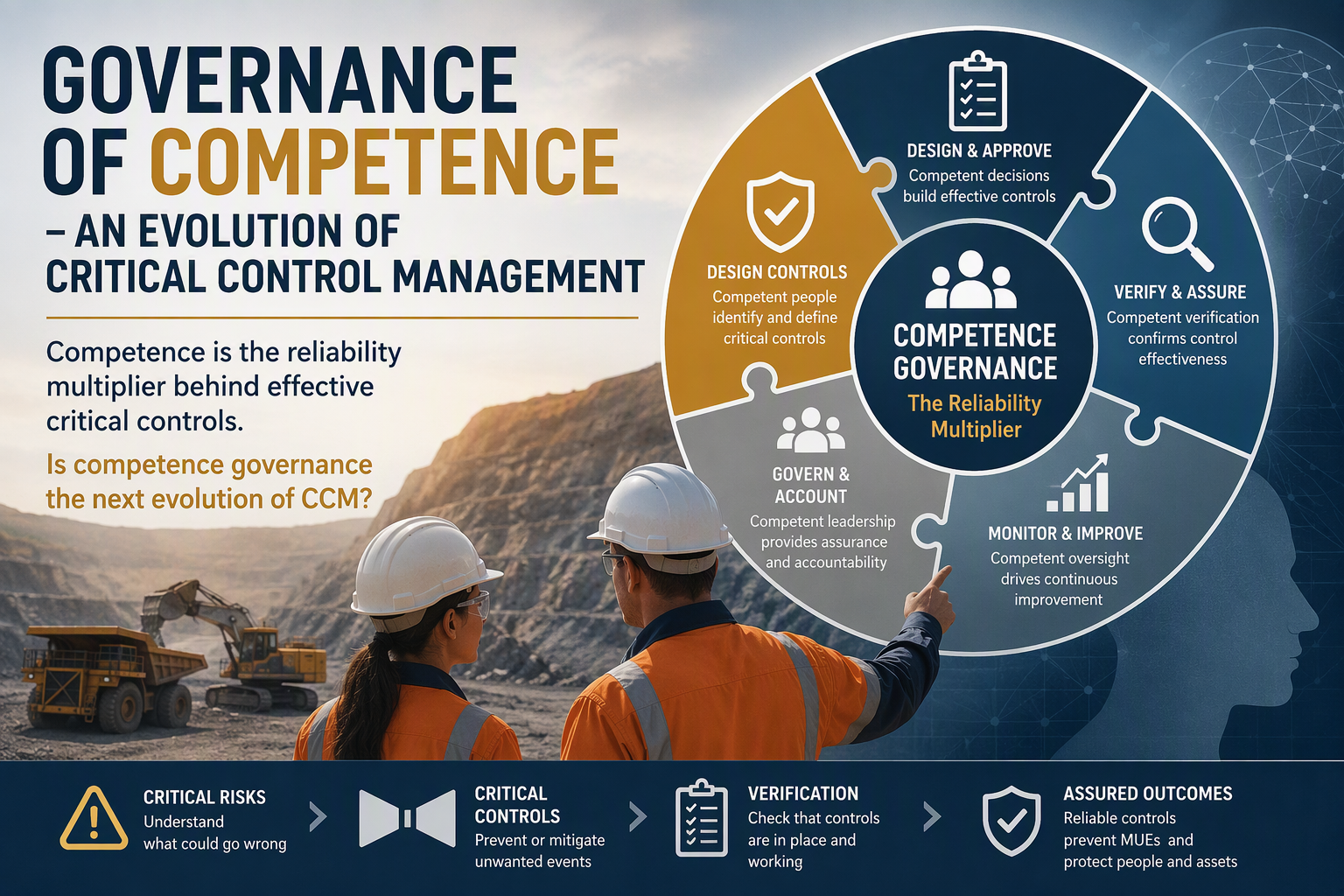
Governance of Competence – an evolution of Critical Control Management
Mining operations are increasingly adopting Critical Control Management (CCM) - it's a strong model, but it largely assumes that managers and superintendents are competent to design and sustain these systems - and importantly, this is rarely examined or assured. By reframing human capability and competence as a core element of CCM, distinct from and complementary to, performance standards and verification activities, this approach would address a common blind spot in critical control programs. Integrating capability with verification closes the human‑performance gap, enhances the reliability of critical controls, and improves operational risk.
In summary, competence can be thought of as the reliability multiplier that determines whether controls are designed and function as needed. Is competence governance the next evolution of CCM?
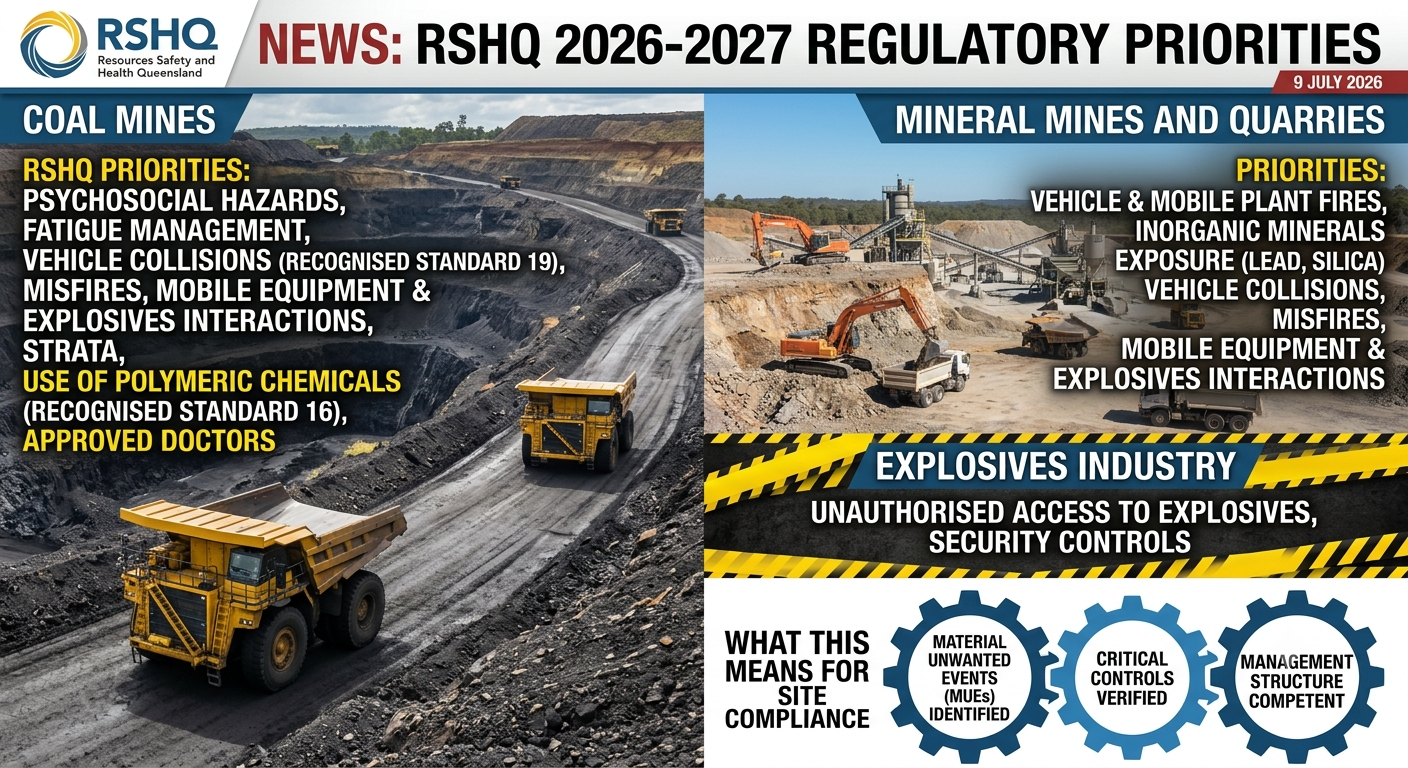
RSHQ 2026-2027 Priorities
Resources Safety and Health Queensland has released its Regulatory Priorities and Outcomes for 2026–27 — and it's a clear signal of where targeted inspectorate campaigns, audits and compliance activity are heading over the coming months.
If you operate a coal mine, mineral mine or quarry, or hold explosives authorities, this is worth a close read.
Whatever the specific topic, a common thread runs through nearly every one of these priorities: the inspectorate will be testing whether your Material Unwanted Events (MUEs) are properly identified, whether your Critical Controls are documented and verifiably effective, and whether your Management Structure — Risk Owners, Control Implementers and Control Monitors — is properly established, delegated, and staffed by demonstrably competent people.

Competence - a crucial but unspoken aspect of Critical Controls!
Critical Controls - and your Management Structure - Need Competent People
The Critical Control framework signals that the persistence of mining fatalities is not an unsolvable technical problem, but an organisational execution challenge that improved governance and accountability structures can address. Competence is what converts governance structures from paper obligations into operational reality. A CCM program is only as good as the people executing it at every stage - from the Mine Operator setting the threshold to the frontline worker checking the control in the field.
This is precisely where My Competency Expert excels. The CCM framework is the structure, but competence is the mechanism that determines whether it actually functions. Documented controls with incompetent owners don't prevent MUEs - they just create the appearance of management.
When Are Critical Controls Required by Mining Legislation?
Critical controls are only required by legislation in relation to Material Unwanted Events — not every perceived hazard or incident. The operator sets that threshold themselves, but guidance is clear on what the minimum should be.
This threshold framing of MUEs — and by extension critical controls — highlights the importance of the competence of the people responsible for implementing and verifying those critical few controls.
Competence is not just an administrative matter. It's the difference between a control functioning and catastrophically failing.
Competence Is the Missing Layer in Critical Control Management
CCM matured the way organisations think about controls — Competence governance is the logical next step in that same maturity curve: applying the same rigour to the people who design and govern controls that CCM already applies to the controls themselves. My Competency Expert provides the structure to govern competence as its own assured system — covering the people who design, approve, and verify critical controls, not only those who operate them.
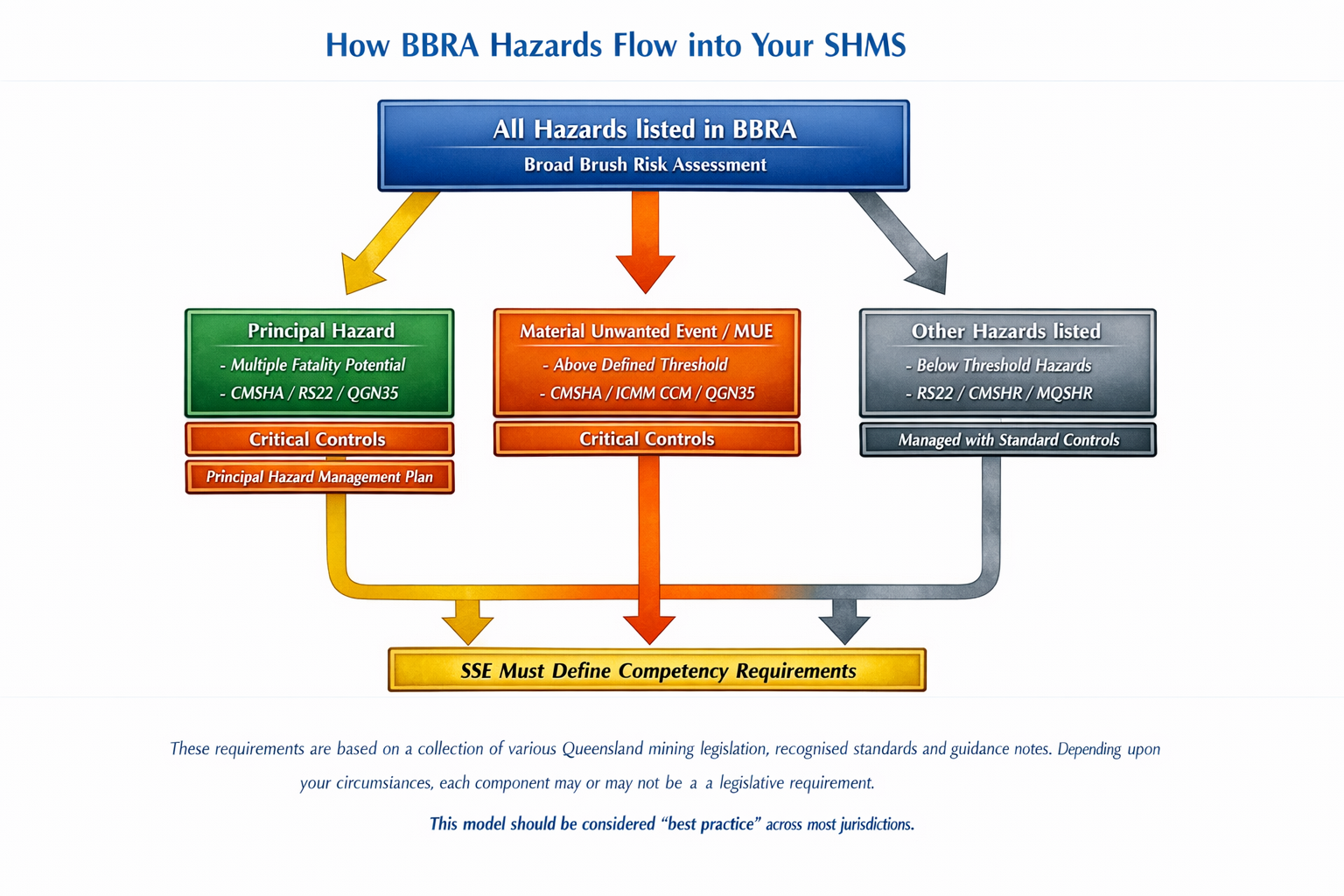
How BBRA hazards flow into your SHMS
So you finished your BBRA/whole-of-mine Risk Assessment? You're at just the beginning of your journey! Your entire Safety and Health Management System comes from the BBRA. Stick to this and you should be compliant - no matter which jurisdiction you come under.
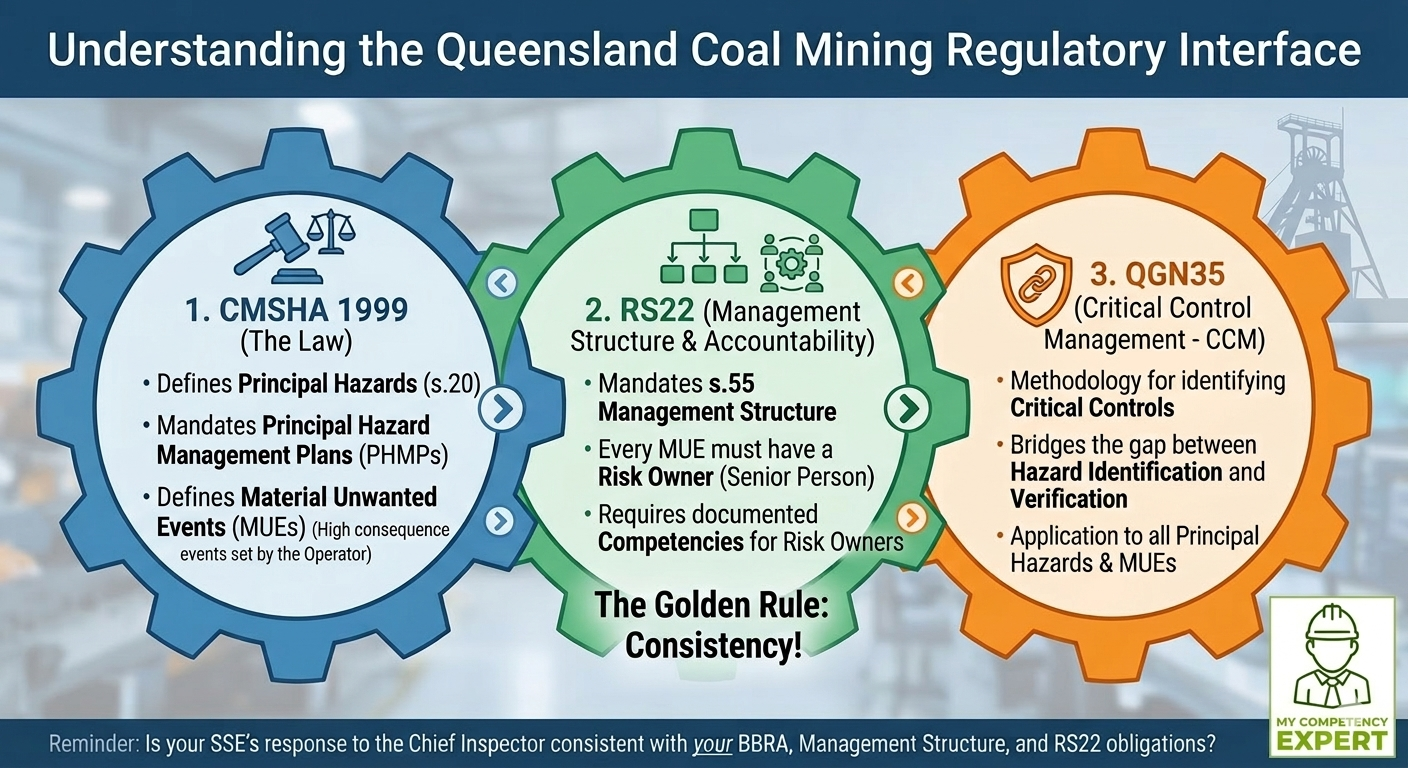
The "Regulatory Trifecta": Mining Safety Act, Management Structure and Critical Control Management
Your response to the Inspector, your BBRA, and your Management Structure must all tell the same story. If they don't, you aren't just failing a paperwork exercise - you’re failing your legislative obligations.
The Chief Inspector’s recent request for PHMP and Critical Control data isn't just a data-gathering exercise - it’s a test of your site’s internal consistency.
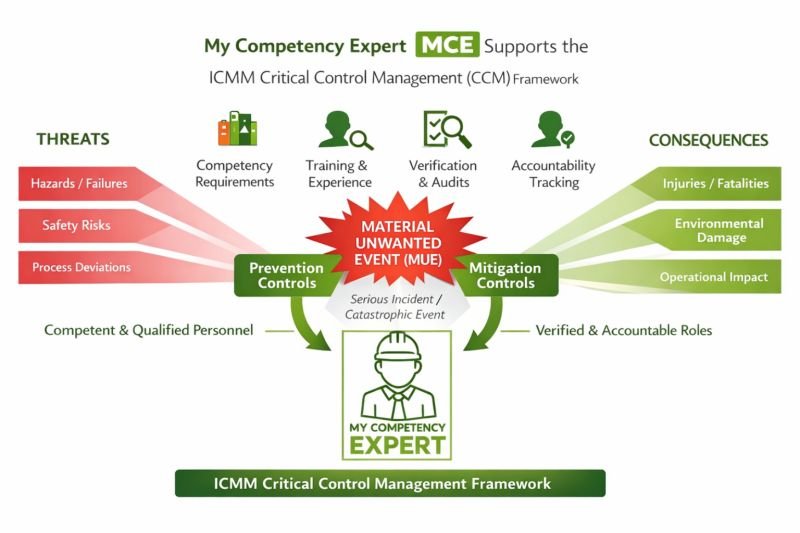
The Human-Performance Gap
The ICMM Critical Control framework spells out how to identify, implement and verify critical controls, but it has one huge blindspot - that is, the competency of the people who develop & maintain this process. That’s where My Competency Expert can help.
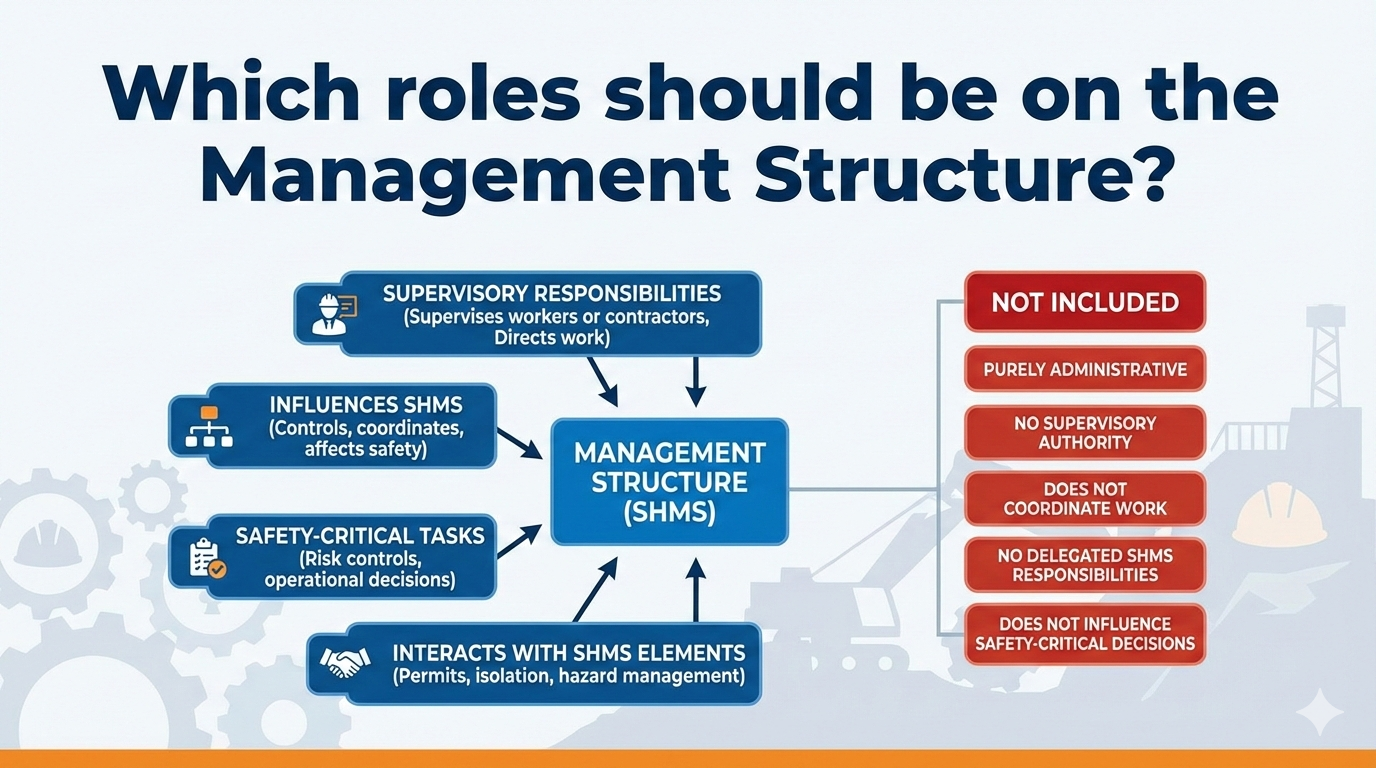
Which roles should be on the Management Structure?
A role should be included in the management structure whenever it carries supervisory responsibilities or influences the implementation of the Safety and Health Management System (SHMS).

NEW FEATURE: ROLE RESILIENCE REPORT
The Role Resilience Report is a powerful new feature in My Competency Expert, designed to help organizations build stronger succession plans and ensure business continuity when key roles become vacant—whether due to unexpected departures, planned retirements, or long-term contingency needs.
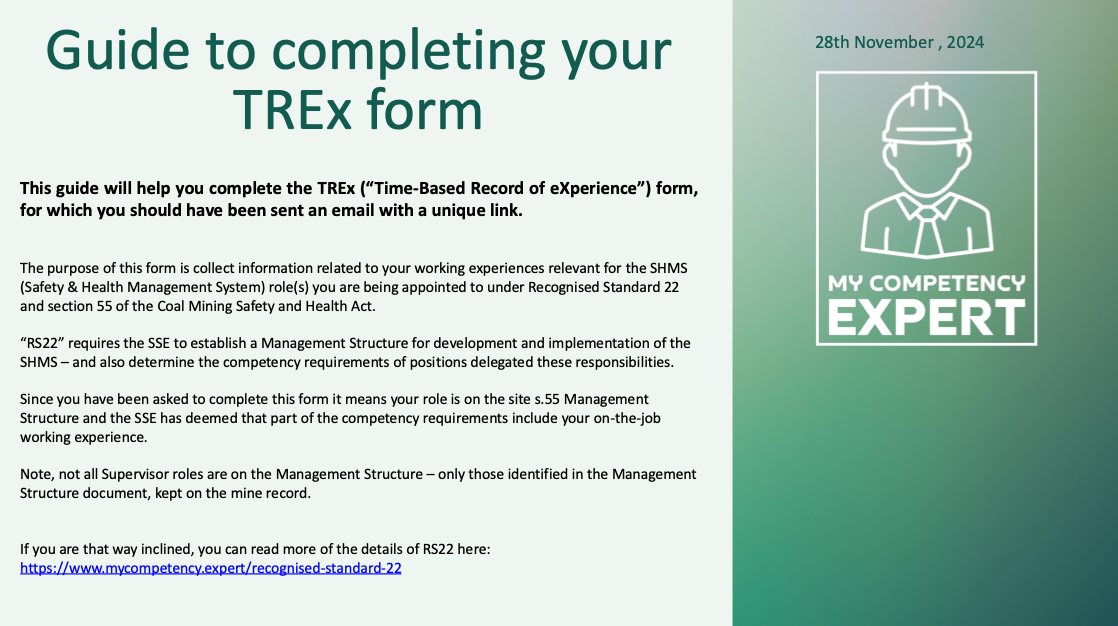
Capturing on-the-job working experience “TREx”
On-the-job working experience should be a key component of the competency requirements for positions on your s.55 Management Structure. My Competency Expert developed a process we call "TREx" (Time-based Record of Experience). We're releasing our guide to TREx today - in the interest of sharing best-practices in mining Safety & Risk.

The new massive legal obligation placed on CMOs you probably don’t even know
“material unwanted event, at a coal mine, means an unwanted event in relation to which the potential or real consequence to safety or health exceeds a threshold defined by the coal mine operator as warranting the highest level of attention.”

What does the Senior person responsible for Contractors and Service Providers do?
What does the Senior person responsible for Contractors and Service Providers do?

Recognised Standard 13 (Tyre, wheel and rim management) and its’ alignment with Recognised Standard 22 Management System).
Alignment of RS13 (Tyre, Wheel & Rim Management) with RS22